Adaptix AI Actions supercharge marketing automation by introducing autonomous, predictive, and personalized capabilities. They optimize campaigns, improve deliverability, and drive revenue by automatically adjusting strategies based on real-time data, ensuring every interaction is impactful and efficient.
The Evolution of Marketing Automation: Why AI is No Longer Optional
Marketing automation has evolved from a niche tool to an indispensable component. What began as simple triggered emails has blossomed into sophisticated multi-channel journeys. In this dynamic environment, relying solely on rule-based automation or manual adjustments is no longer sufficient. The sheer volume of data, demand for hyper-personalization, and need for instant responsiveness make traditional approaches cumbersome. This is why AI is not just an enhancement but a foundational necessity. AI marketing automation empowers businesses to move beyond reactive tactics, enabling proactive and adaptive engagement. It allows marketers to understand complex patterns, anticipate customer needs, and optimize campaigns in real-time, delivering a significant competitive edge. Without AI, businesses risk falling behind, unable to deliver the personalized, efficient, and revenue-driving experiences today’s market demands.
What Are Adaptix AI Actions and How Do They Work?
Adaptix AI Actions are intelligent, autonomous capabilities designed to integrate seamlessly into your existing marketing automation workflows, transforming them from static sequences into dynamic, adaptive journeys. These AI tools leverage sophisticated machine learning algorithms to analyze vast amounts of data, including customer behavior, engagement metrics, purchase history, and demographic information. By processing this rich dataset, Adaptix AI Actions predict future outcomes, identify optimal engagement points, and make real-time decisions without constant human intervention.
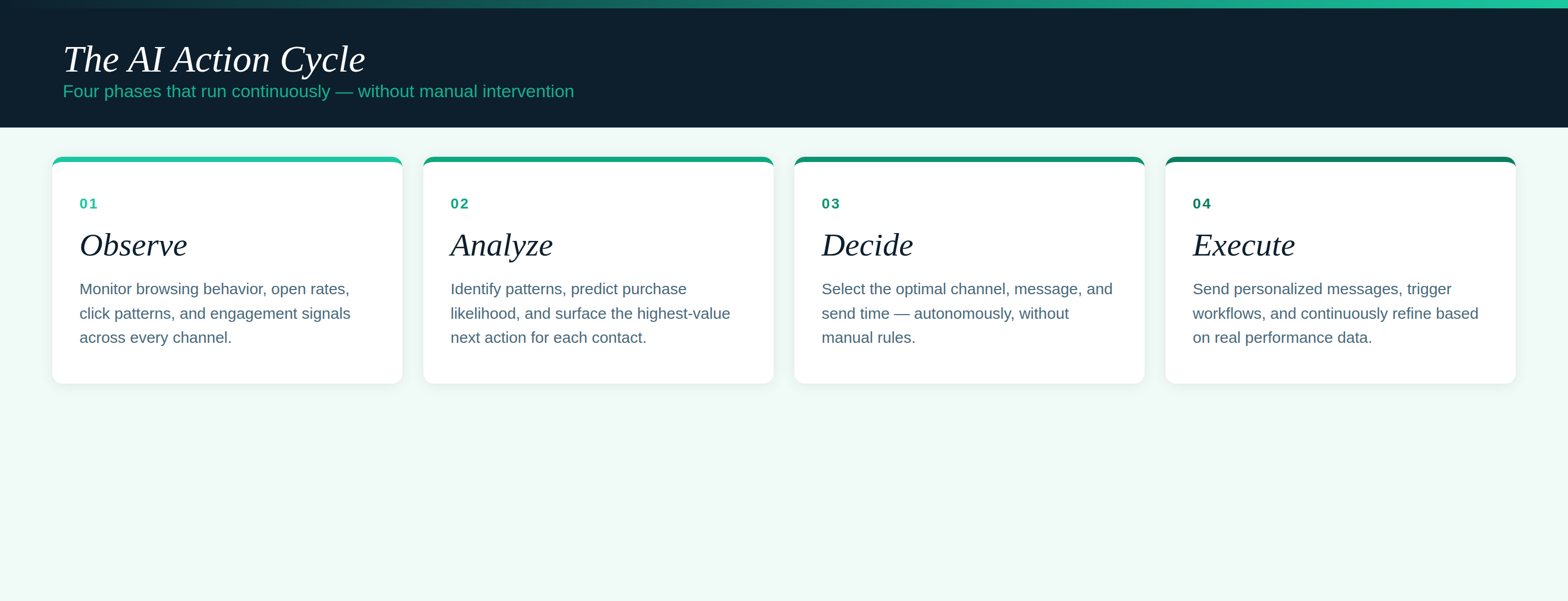
At their core, Adaptix AI Actions work by observing, analyzing, deciding, and executing. For instance, they might observe a customer’s browsing habits, analyze data to predict their likelihood of purchasing a specific product, decide the most effective channel (email marketing, SMS marketing) and timing for a targeted offer, and then autonomously send a personalized message. This cycle continuously refines strategies based on ongoing performance, ensuring campaigns are always optimized for maximum impact. They serve as intelligent guardrails, ensuring that while automation drives efficiency, AI ensures precision and relevance, protecting brand reputation and maximizing deliverability. These AI-powered capabilities enhance everything from email marketing automation to landing page optimization, making every interaction more strategic and effective.
How Do Adaptix AI Actions Revolutionize Marketing Automation?
Adaptix AI Actions revolutionize marketing automation by introducing an unparalleled level of intelligence, adaptability, and personalization that traditional systems cannot match. They move beyond pre-set rules to offer truly autonomous marketing. Instead of merely executing a predefined sequence, Adaptix AI Actions continuously learn and adapt, dynamically adjusting campaign elements based on real-time feedback and predictive analytics. This ensures your marketing efforts are always aligned with current customer behavior and market trends, ensuring maximum relevance and impact.
Consider a traditional email marketing automation workflow: a series of emails is scheduled based on a customer’s sign-up. Adaptix AI Actions transform this by, for example, dynamically segmenting users based on predicted engagement likelihood, optimizing send times for individual recipients, or autonomously A/B testing subject lines and content variations to improve open rates and click-throughs. For example, if a customer shows high intent for a product, an AI Action might trigger an immediate SMS marketing message with a limited-time offer, rather than waiting for the next scheduled email. This level of predictive marketing AI allows campaigns to self-optimize, driving better results with less manual effort. It’s not just about automating tasks; it’s about automating intelligent decision-making at scale, fundamentally changing how businesses interact with their audience and approach marketing strategy.
Key Benefits of Integrating Adaptix AI Actions into Your Strategy
Integrating Adaptix AI Actions into your marketing strategy unlocks a multitude of benefits, fundamentally transforming efficiency, personalization, and revenue generation. The primary advantages stem from their ability to automate complex decision-making, ensuring every marketing touchpoint is optimized.
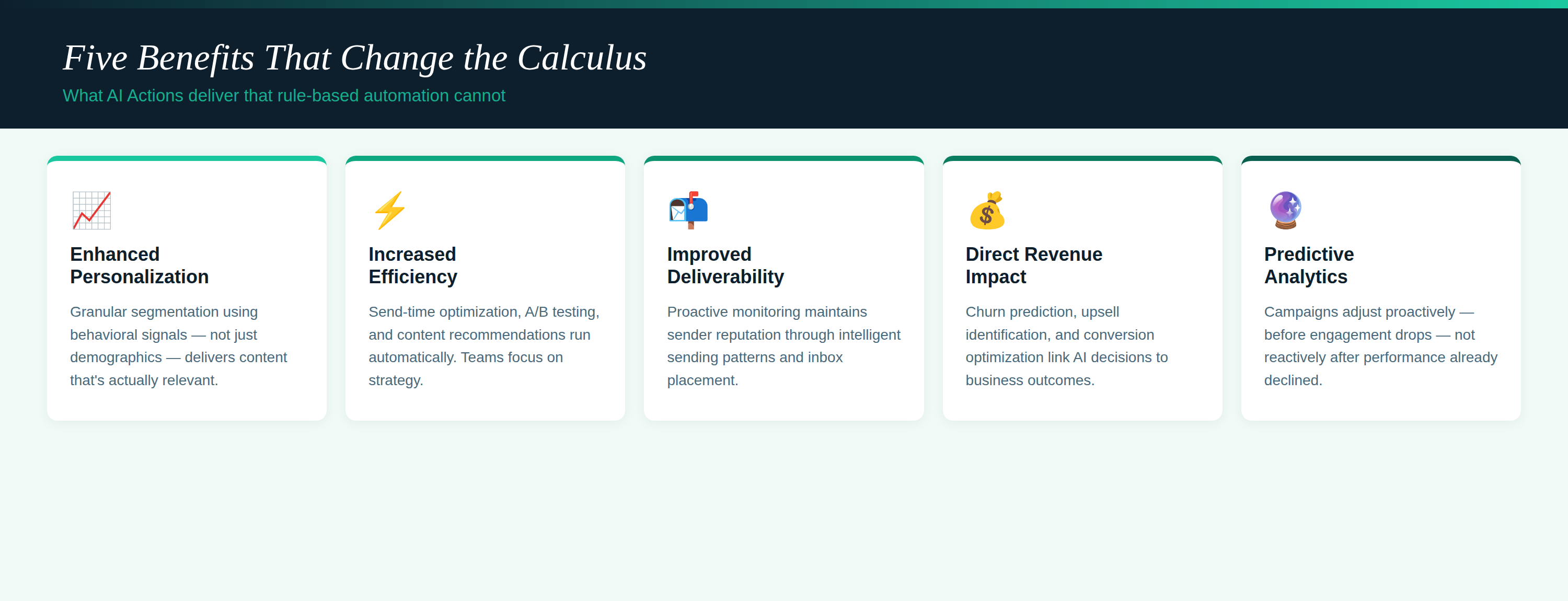
One of the most significant benefits is enhanced personalization at scale. Adaptix AI Actions allow for granular segmentation, enabling you to deliver highly relevant content and offers to individuals or micro-segments based on their unique behaviors and preferences. This AI-powered personalization moves beyond basic demographic data to deep behavioral insights, ensuring messages resonate more profoundly.
Next, you’ll experience a dramatic increase in efficiency and time savings. By automating optimization tasks like send-time optimization, content recommendations, and A/B testing, your marketing team can redirect valuable time from manual adjustments to higher-level strategic planning. This autonomous marketing capability streamlines workflows, making your operations more agile.
Improved deliverability is another critical advantage. Adaptix AI Actions proactively monitor and adjust sending patterns, content relevance, and list hygiene to maintain a high sender reputation, crucial for ensuring your emails actually reach the inbox. This deliverability-first approach is embedded in the core functionality, protecting your investment in email marketing automation.
Furthermore, these AI tools contribute directly to revenue-driving AI strategies. By predicting customer churn, identifying upsell opportunities, and optimizing conversion paths, Adaptix AI Actions directly impact your bottom line. They ensure marketing spend is allocated to the most effective channels and messages, maximizing ROI.
Finally, Adaptix AI Actions provide predictive analytics and insights, offering a clearer understanding of future customer behavior and campaign performance. This allows for proactive adjustments rather than reactive responses, leading to more stable and growth-oriented marketing outcomes. The intuitive interface and scalable nature of Adaptix ensure these benefits are accessible and adaptable to businesses of all sizes, making it easier to leverage sophisticated AI tools for marketing.
Real-World Impact: Driving Revenue and Enhancing Customer Experiences
The real-world impact of Adaptix AI Actions is evident in their ability to tangibly drive revenue and profoundly enhance customer experiences across various touchpoints. By moving beyond conventional marketing automation, businesses achieve results previously unattainable with manual or rule-based systems alone.
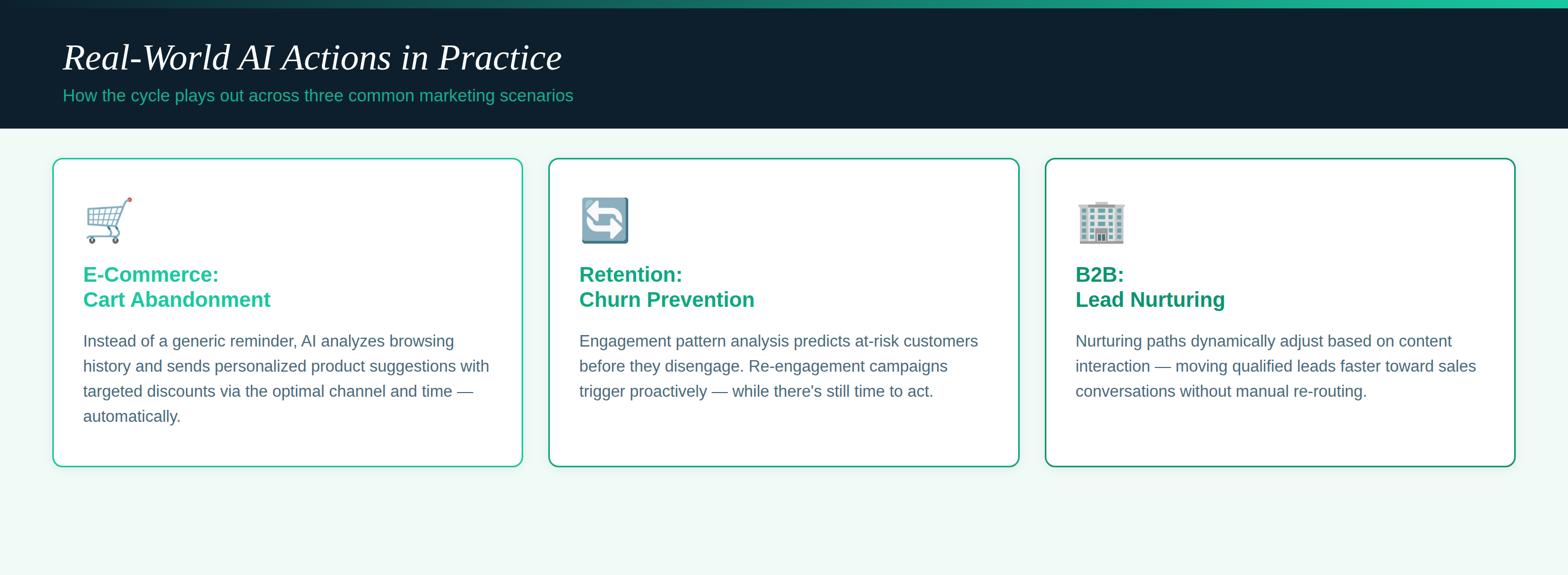
Consider a scenario in e-commerce: a customer browses product pages but abandons their cart. With traditional automation, they might receive a generic cart abandonment email. With Adaptix AI Actions, the system analyzes their browsing history, previous purchases, and external market data. It might then trigger a personalized SMS marketing message offering a discount on the specific items they viewed most, or an email suggesting complementary products to their abandoned items, paired with social proof. This level of AI-powered personalization significantly increases conversion rates, directly translating to increased sales and revenue.
Another example can be found in customer retention. Adaptix AI Actions can predict potential churn risk by analyzing engagement patterns and past interactions. Instead of waiting for a customer to become inactive, the AI can proactively trigger a re-engagement campaign, such as a personalized email offering exclusive content or a survey to understand their needs, preventing customer loss before it happens. This proactive approach strengthens customer loyalty and lifetime value.
For B2B companies, Adaptix AI Actions can optimize lead nurturing. By analyzing how leads interact with content on landing pages, webinars, and email campaigns, the AI can dynamically adjust the nurturing path, ensuring leads receive the most relevant information at the optimal time, thereby accelerating sales cycles and improving conversion rates from lead to MQL. The continuous optimization through predictive marketing AI ensures every interaction is meaningful, leading to better customer satisfaction and a stronger brand perception. This efficient approach to complex marketing challenges highlights how Adaptix AI Actions are not just tools, but strategic partners in achieving marketing excellence and concrete business growth.
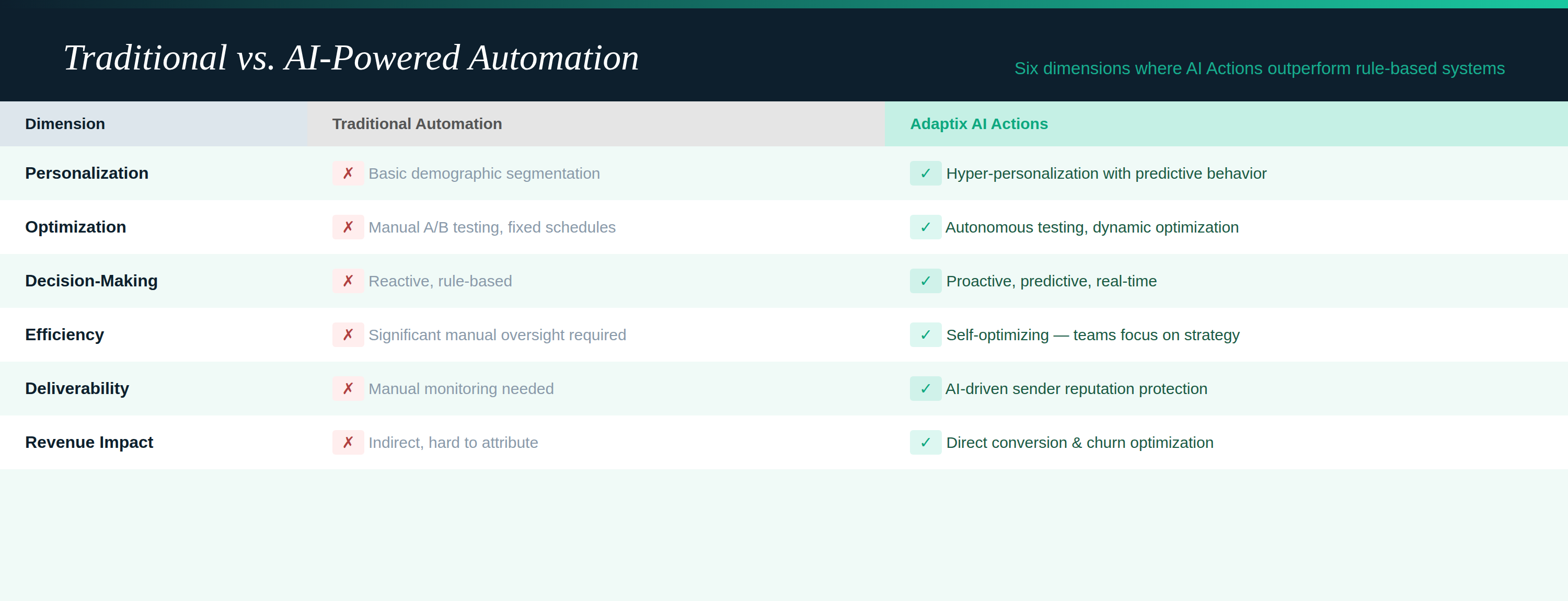
| Feature Area | Traditional Automation | Adaptix AI Actions (AI Marketing Automation) |
|---|---|---|
| Personalization | Basic segmentation (demographics, simple behavior). | Hyper-personalization, micro-segmentation based on predictive behavior and real-time intent. |
| Optimization | Manual A/B testing, pre-set schedules. | Autonomous A/B/n testing, AI-driven send-time optimization, dynamic content recommendations. |
| Decision-making | Rule-based, reactive. | Predictive, proactive, real-time decision-making based on complex data analysis. |
| Efficiency | Requires significant manual oversight and adjustments. | Self-optimizing, reduces manual effort, allows marketers to focus on strategy. |
| Deliverability | Requires manual monitoring and list hygiene. | Deliverability-first approach with AI monitoring sender reputation and content relevance for improved inboxing. |
| Revenue Impact | Indirect, based on campaign execution. | Direct impact through conversion optimization, churn prediction, and upsell identification. |
This comparison illustrates how Adaptix AI Actions elevate marketing automation from a task-execution system to a revenue-driving AI engine.
Getting Started: Seamlessly Integrating Adaptix AI Actions for Future-Proof Marketing
Embarking on a journey with Adaptix AI Actions to future-proof your marketing strategy is a streamlined and supportive process designed for ease of integration. Our intuitive platform ensures that bringing these powerful AI tools for marketing into your operations doesn’t require a complete overhaul, but rather a strategic enhancement.
The first step involves a comprehensive discovery and planning session. Our experts work with you to understand your current marketing landscape, identify key pain points, and define your specific goals for AI marketing automation, whether it’s boosting email marketing deliverability, enhancing SMS marketing conversions, or optimizing landing pages. This ensures the implementation is tailored to your unique business needs and objectives.
Next, Adaptix provides robust migration and integration support. We understand that transitioning systems can be daunting, which why our team facilitates a smooth transfer of your existing data and integrates Adaptix seamlessly with your current marketing stack. This meticulous process ensures data integrity and minimizes disruption to your ongoing campaigns. Our protection protocols and guardrails are built-in from the ground up, safeguarding your brand data and customer privacy throughout the migration.
Following integration, we focus on onboarding and training. Our user-friendly interface is designed for rapid adoption, and our dedicated support team provides personalized training to ensure your team can leverage the full power of Adaptix AI Actions effectively. You’ll learn how to utilize segmentation, set up autonomous campaigns, interpret tracking analytics, and manage your brand kit within the platform.
Finally, Adaptix emphasizes continuous optimization and support. Our platform offers predictive analytics and performance tracking, allowing you to monitor the impact of AI Actions in real-time. Our team remains available for ongoing assistance, helping you refine strategies and scale your use of AI tools as your business evolves. By choosing Adaptix, you’re not just adopting technology; you’re partnering with a solution designed to make your marketing more efficient, scalable, and ultimately, more successful.
Unlock the full potential of your marketing with Adaptix AI Actions and transform your automation into a truly intelligent, revenue-driving force. Visit Adaptix.ai today to explore how our AI tools can revolutionize your customer engagement and drive unparalleled growth.
Frequently asked questions
What are Adaptix AI Actions?
Adaptix AI Actions are intelligent, autonomous AI tools designed to enhance marketing automation workflows. They utilize machine learning to predict customer behavior, optimize campaign timing, personalize content, and segment audiences, all without constant manual oversight, leading to more effective and efficient marketing.
How do AI Actions improve email deliverability?
Adaptix AI Actions enhance email deliverability through predictive analytics and smart scheduling. By analyzing engagement patterns and sender reputation in real-time, they help send emails at optimal times and to the most receptive segments, ensuring your messages reach the inbox and avoid spam filters, upholding our deliverability-first promise.
Can Adaptix AI Actions truly automate personalization?
Yes, Adaptix AI Actions excel at automating personalization at scale. They analyze vast amounts of customer data to identify individual preferences and behaviors, then automatically tailor content, offers, and communication channels. This ensures each customer receives highly relevant messages, boosting engagement and conversion rates effortlessly.
What kind of revenue impact can I expect from using AI Actions?
By optimizing campaign performance, improving personalization, and ensuring superior deliverability, Adaptix AI Actions are designed to be revenue-driving. They lead to higher open rates, increased click-throughs, and better conversion rates, translating directly into enhanced ROI and measurable growth for your marketing efforts.
Are Adaptix AI Actions easy to integrate with existing marketing platforms?
Adaptix is built with seamless integration in mind. While AI Actions are part of the Adaptix ecosystem, the platform itself is designed for intuitive setup and operation. For specifics on integration with external tools, Adaptix provides comprehensive support and documentation to ensure a smooth transition and rapid deployment of AI capabilities.