Adaptix AI’s Canva integration empowers marketers to effortlessly create visually stunning and brand-consistent emails and landing pages directly within the platform. This fusion of AI-powered marketing automation with intuitive design tools streamlines workflows, enhances engagement, and drives better conversion rates by making professional-grade design accessible to all users.
Why is Visual Appeal Critical for Modern Email and Landing Page Marketing?
Visual appeal is paramount in today’s crowded digital landscape because it instantly captures attention, communicates professionalism, and builds trust. In an era where attention spans are fleeting, a well-designed email or landing page isn’t just aesthetically pleasing; it’s a strategic asset that significantly impacts engagement, recall, and conversion rates. High-quality visual content quickly conveys your brand’s message and value, making your communications stand out amidst the constant influx of digital information.
Effective email marketing design and landing page design leverage visuals to guide the user’s eye, highlight key information, and create a memorable experience. Studies consistently show that content with relevant images gets significantly more views and shares than content without. For Adaptix AI users, this means that even the most compelling copy or the most precise segmentation can be undermined if the visual presentation is poor or inconsistent. A visually appealing campaign can reduce bounce rates, increase time on page, and ultimately, drive more revenue, reinforcing the importance of intuitive design tools in your marketing arsenal.
Moreover, brand consistency through visual elements fosters recognition and strengthens your brand identity across all touchpoints. When your emails and landing pages consistently reflect your brand’s aesthetic, colors, and typography, you build a cohesive and professional image that resonates with your audience. This consistency is a cornerstone of effective marketing, helping to solidify customer loyalty and differentiate your brand in a competitive market. Without strong visual design, your message risks getting lost or being perceived as unprofessional, directly impacting your overall marketing performance and potential for revenue-driving success.
Introducing Adaptix AI’s Seamless Canva Integration: Your Design Powerhouse
Adaptix AI’s seamless Canva integration brings a powerful, user-friendly design studio directly into your marketing automation platform, transforming how you create visual content for emails and landing pages. This integration eliminates the need for switching between multiple applications, allowing marketers to design, edit, and publish high-quality visuals without ever leaving the Adaptix AI environment. It’s designed to be an intuitive design tool that democratizes professional design, making it accessible to users regardless of their graphic design expertise.
This innovative feature acts as your personal design powerhouse, enabling you to leverage Canva’s extensive library of templates, stock photos, graphics, and design elements within Adaptix AI. Whether you’re crafting a captivating email banner or designing an engaging hero section for a landing page, the integration provides direct access to the tools you need. This direct access significantly simplifies the visual content creation process, ensuring that your brand’s message is always accompanied by compelling and professionally crafted visuals that enhance engagement.
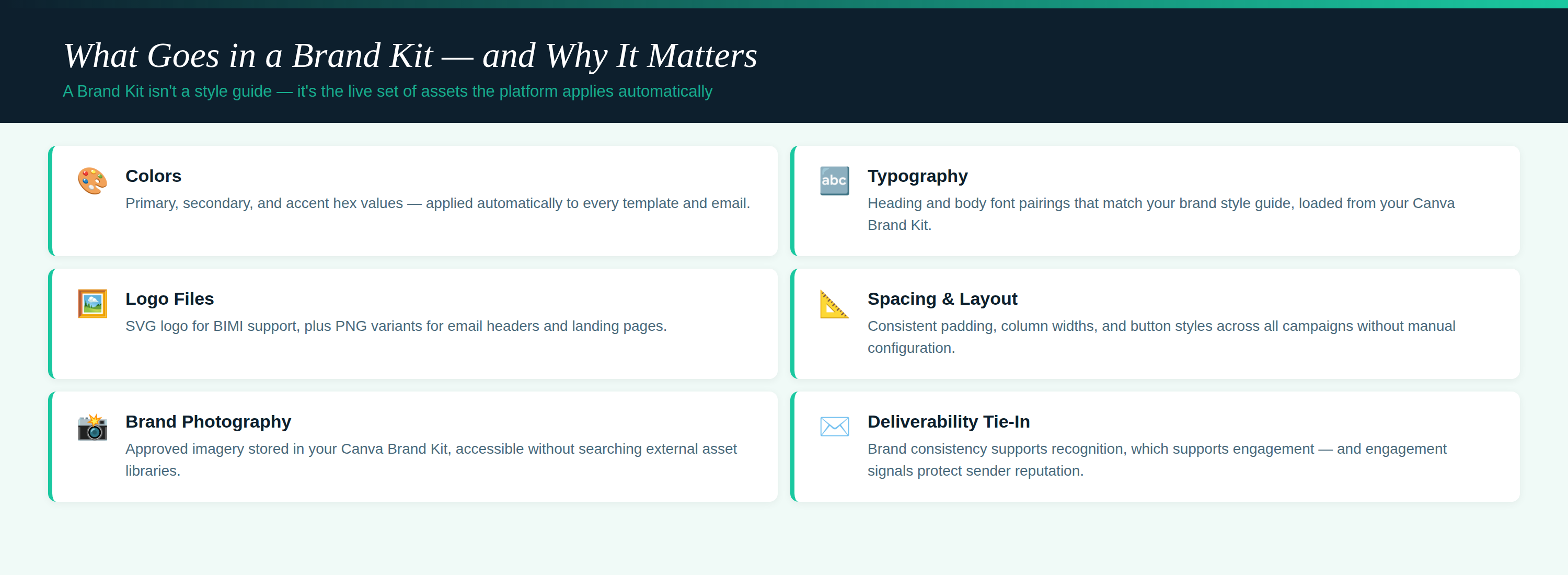
The Adaptix AI + Canva integration is more than just a convenience; it’s a strategic enhancement to our AI tools, providing a robust solution for maintaining brand consistency. By allowing direct access to your Canva Brand Kit, you can ensure that all visual assets used in your email marketing and landing pages adhere to your brand’s guidelines, including colors, fonts, and logos. This commitment to brand consistency, combined with Adaptix AI’s deliverability-first approach and autonomous email marketing capabilities, ensures that your campaigns not only look great but also perform exceptionally, driving meaningful results.
Unlock Unprecedented Efficiency: How Adaptix AI + Canva Streamlines Your Workflow
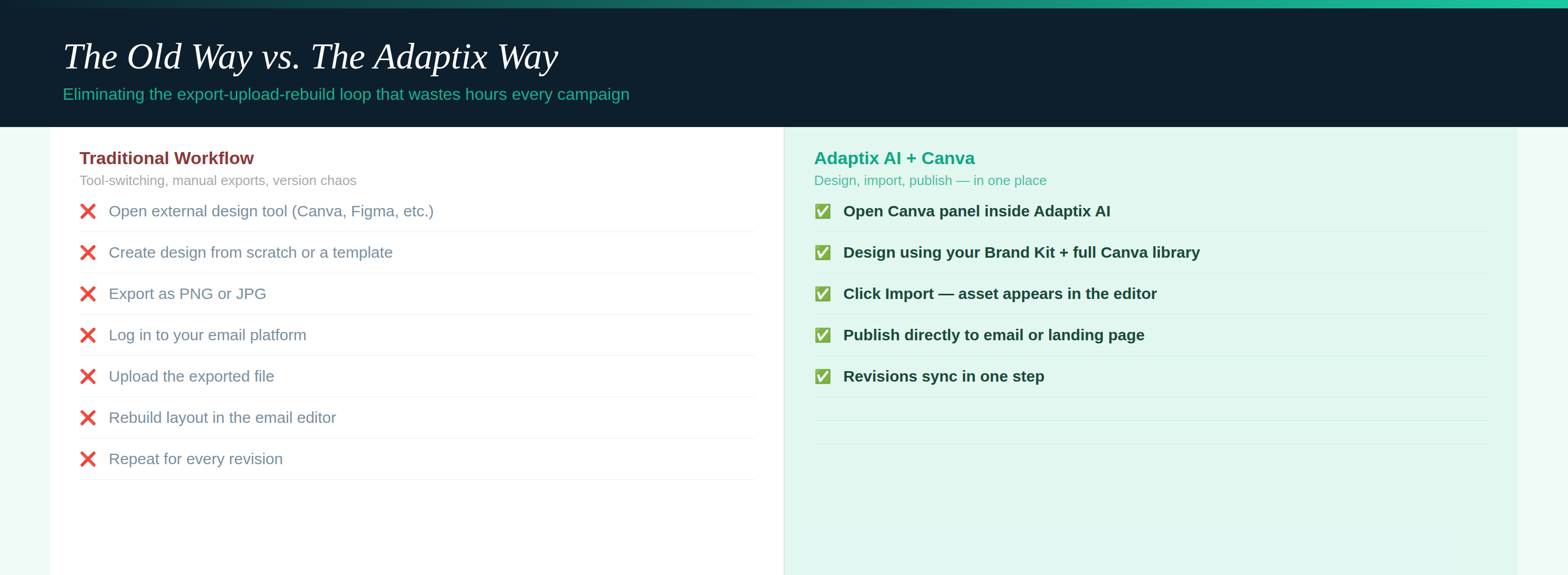
The Adaptix AI + Canva integration unlocks unprecedented efficiency by streamlining your marketing workflow, eliminating cumbersome steps and saving valuable time for your marketing team. This seamless connection means that once you design an asset in Canva, it can be directly imported and utilized within Adaptix AI for your email marketing and landing page design efforts, completely bypassing manual downloads and uploads. This dramatically reduces the friction typically associated with integrating design and marketing platforms, fostering a more agile and productive environment.
One of the most significant advantages is the ability to achieve visual content creation and implementation faster than ever before. For example, creating a new email campaign often involves designing multiple visual elements, from headers to call-to-action buttons. With Adaptix AI’s Canva integration, you can design all these components within Canva’s intuitive interface, using its vast library of resources or your own custom assets, and then instantly pull them into your Adaptix AI email builder. This rapid design-to-deployment cycle empowers marketers to respond quickly to market trends, launch timely promotions, and keep content fresh without delays.
Here’s a comparison of a traditional design workflow versus the integrated Adaptix AI + Canva workflow:
| Feature | Traditional Workflow | Adaptix AI + Canva Workflow |
|---|---|---|
| Design Environment | External design software (e.g., Photoshop) | Canva (accessed directly within Adaptix AI) |
| Asset Transfer | Design in external tool -> Export -> Upload to Adaptix AI -> Insert into campaign | Design in Canva -> Import directly from Canva library within Adaptix AI |
| Brand Consistency | Manual application of brand guidelines; potential for inconsistency | Direct access to Canva Brand Kit; automatic application of brand assets |
| Time Investment | High, due to context switching, exports, and uploads | Low, due to integrated environment and direct asset transfer |
| Learning Curve | Often requires advanced design software knowledge | Canva’s user-friendly interface; minimal learning curve for new users |
| Team Collaboration | Sharing files, version control challenges | Canva’s collaborative features, accessible within Adaptix AI environment |
This table clearly illustrates how the integration transforms a multi-step, often disjointed process into a unified and highly efficient workflow, bolstering your marketing automation efforts. By collapsing design and implementation into a single, intuitive experience, Adaptix AI with Canva empowers your team to focus more on strategy and less on operational hurdles, making it a true revenue-driving marketing solution.
Transforming Your Campaigns: Tangible Benefits for Email and Landing Pages

The Adaptix AI + Canva integration delivers tangible benefits that fundamentally transform the quality and effectiveness of your email marketing and landing page campaigns. Foremost among these is the dramatic improvement in visual quality and professionalism. By leveraging Canva’s rich design capabilities, even users without a dedicated graphic designer can create stunning visuals that rival professionally designed assets. This means higher resolution images, cohesive color palettes, and engaging layouts that capture attention and elevate your brand’s perception, directly contributing to a deliverability-first strategy.
Another key benefit is enhanced brand consistency across all your digital communications. With direct access to your Canva Brand Kit, you can effortlessly apply your official brand colors, fonts, logos, and imagery to every email and landing page. This unified visual identity reinforces brand recognition, builds trust with your audience, and ensures a seamless experience across all touchpoints. Consistent branding makes your communications more memorable and professional, which is crucial for building a strong, recognizable presence in your target market and supports segmentation efforts by ensuring a consistent brand experience across different audience groups.
Furthermore, this integration significantly boosts engagement and conversion rates. Visually appealing emails are more likely to be opened, read, and clicked through, while well-designed landing pages tend to keep visitors engaged longer and guide them more effectively towards a call to action. By making it easier to create captivating visual content, Adaptix AI’s Canva integration directly contributes to higher click-through rates (CTRs) for emails and improved conversion rates for landing pages. This synergy of powerful AI tools for marketing automation with simplified visual design ensures your campaigns are not just sent, but also seen, absorbed, and acted upon, making Adaptix AI a truly efficient and scalable solution for modern marketers.
Ready to Design Smarter? Getting Started with Adaptix AI and Canva
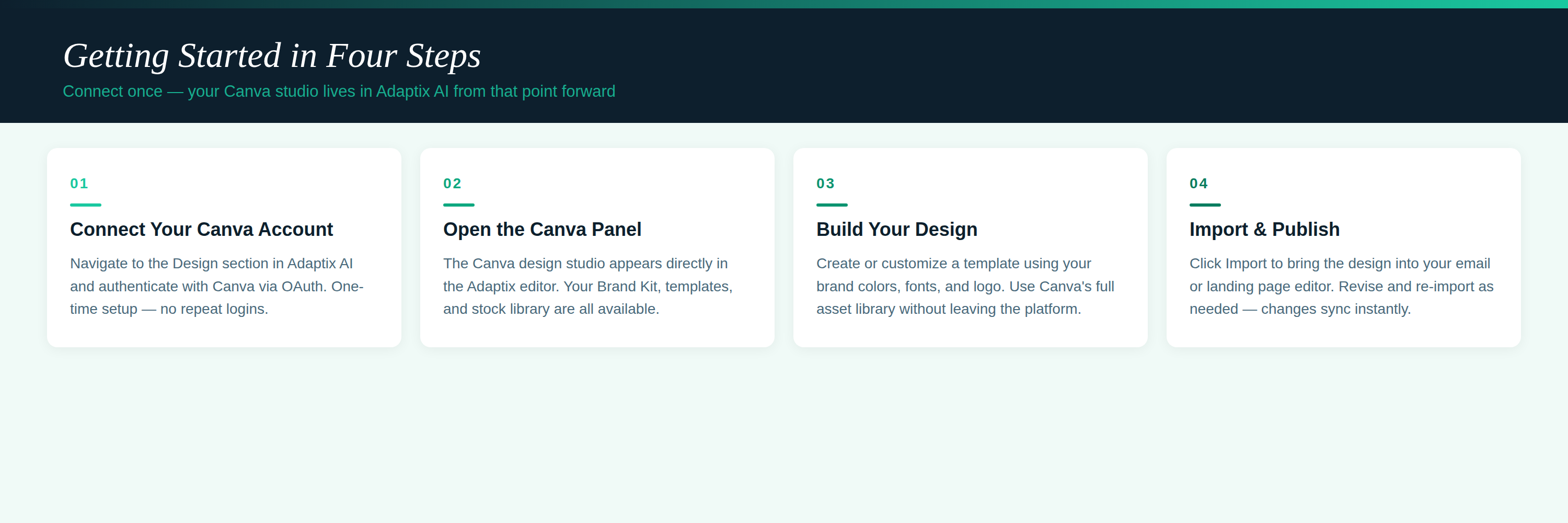
If you’re ready to design smarter and elevate your marketing campaigns, getting started with Adaptix AI’s Canva integration is a straightforward process designed for maximum user accessibility. The integration is built to be intuitive, allowing you to seamlessly connect your Canva account directly within your Adaptix AI platform. This ensures that you can begin leveraging Canva’s vast design resources for your email marketing and landing page design needs almost immediately, without complicated setup procedures or extensive training.
To initiate the integration, simply navigate to the design section within your Adaptix AI account where you build emails or landing pages. You’ll find an option to connect with Canva, which will guide you through a quick authentication process. Once connected, a dedicated Canva button or integration panel will appear within the Adaptix AI editor, providing direct access to your Canva designs and templates. This streamlined approach embodies Adaptix AI’s commitment to providing an efficient, simplified, and intuitive platform for all your marketing automation requirements.
Embrace the future of visual content creation and enhance your revenue-driving marketing efforts today. By combining Adaptix AI’s powerful segmentation, predictive analytics, and deliverability-first capabilities with Canva’s intuitive design tools, you’re equipped to create campaigns that not only look professional but also perform exceptionally. Visit Adaptix.ai to explore our features or contact our team for a personalized demonstration of how this powerful integration can transform your email and SMS marketing, ensuring your brand stands out and converts.

Frequently asked questions
What is Adaptix AI’s Canva integration?
Adaptix AI’s Canva integration is a powerful feature that allows users to seamlessly design and embed graphics, images, and other visual elements created in Canva directly into their Adaptix AI email campaigns and landing pages. It combines Adaptix’s revenue-driving AI tools with Canva’s user-friendly design capabilities.
How does Canva integration improve my email designs?
It significantly enhances email designs by providing access to Canva’s vast library of templates, fonts, and graphics. This enables you to create visually appealing, on-brand emails that capture recipient attention, improve readability, and ultimately boost engagement and click-through rates more effectively.
Can I maintain brand consistency using this integration?
Absolutely. The integration allows you to leverage Canva’s brand kit features, ensuring that all visuals – from colors and fonts to logos and imagery – adhere to your brand guidelines across all emails and landing pages built within Adaptix AI. This fosters a cohesive and professional brand presence.
Is the Adaptix AI Canva integration easy to use?
Yes, it is designed for intuitiveness. The integration provides a streamlined workflow, allowing users to switch between Adaptix AI’s campaign builder and Canva’s design interface effortlessly. You don’t need advanced design skills to create professional-looking marketing assets.
What kind of impact can I expect on my landing pages?
For landing pages, the integration means you can design highly engaging and visually optimized pages that clearly communicate your message and call to action. Better design leads to improved user experience, higher conversion rates, and a more effective way to capture leads or sales.