
How to Build an Email List in 2026: 15 Proven Tactics to Grow Faster
If you’re searching for how to build an email list, how to create an email list, how to start an email list, or the best way to grow a mailing list that actually drives results, this guide is for you.
An email list is one of the most valuable marketing assets your business can own. Unlike social media audiences or algorithm-driven reach, your email list gives you a direct, permission-based way to communicate with people who want to hear from you.
In this article, you’ll learn:
- what an email list is,
- why email list building matters,
- how to build an email list from scratch,
- 15 proven tactics to grow your list,
- best practices and mistakes to avoid,
- and the key metrics to track so your list grows in size and quality.
What Is an Email List?
An email list (also called a mailing list or subscriber list) is a collection of email addresses from people who have explicitly chosen to receive emails from your business.
These emails may include:
- newsletters,
- educational content,
- product updates,
- promotions,
- event invitations,
- or automated follow-up messages.
What is email list building?
Email list building is the process of attracting and converting people into subscribers through signup forms, landing pages, lead magnets, quizzes, referrals, checkout opt-ins, and other permission-based methods.
In short: email list building is how you create a direct audience you can reach anytime.
Why Building an Email List Matters
A lot of businesses depend heavily on channels they don’t control—social media, paid ads, and search rankings. Those channels can be powerful, but they can also change quickly.
Your email list is different. It’s an owned channel.
Why email list building is important
A strong email list helps you:
- Reach people directly in their inbox
- Promote offers and content without waiting on algorithms
- Build relationships over time through consistent communication
- Segment your audience for more relevant messages
- Increase repeat traffic and conversions
- Create long-term marketing leverage that compounds over time
Email list building is about quality, not just size
A bigger list is not always a better list.
The goal is to build a list of subscribers who:
- opted in willingly,
- are interested in your topic or offer,
- and are likely to engage with your emails.
That’s what turns a mailing list into a growth channel instead of a vanity metric.
What Makes a High-Quality Email List?
Before you focus on how to grow your list fast, it helps to understand what makes a list valuable.
1) Permission-based
Subscribers should give clear consent to receive emails from you.
2) Relevant to your business
The people joining your list should actually care about what you offer.
3) Easy to segment
A strong list is easier to personalize when you know how people joined, what they’re interested in, and how they engage.
4) Maintained over time
Email lists need upkeep. Removing inactive contacts and keeping data clean helps performance and deliverability.
5) Built through value exchange
People usually subscribe when they get something useful in return:
- a discount,
- a guide,
- a checklist,
- a webinar,
- a quiz result,
- or ongoing insights.
How to Build an Email List (Core Framework)
If you’re starting from scratch, don’t overcomplicate it. Most successful email list building strategies follow the same basic framework.
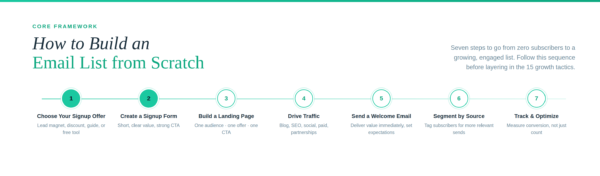
1) Choose your signup offer
Decide what people get when they join:
- newsletter updates,
- a lead magnet,
- a discount,
- a free consultation,
- a tool,
- a quiz result,
- or access to a resource.
2) Create a signup form
Use a simple form with clear value and a strong call to action (CTA). Keep fields minimal to reduce friction.
3) Build a dedicated landing page (when needed)
If you’re promoting a specific offer, webinar, or campaign, use a landing page focused on one goal: the signup.
4) Drive traffic to your form or landing page
Use channels like:
- blog content,
- SEO,
- social media,
- YouTube,
- LinkedIn,
- paid ads,
- partnerships,
- and QR codes/offline promotion.
5) Send a welcome email or welcome sequence
Deliver the promised value immediately and set expectations for what subscribers will receive next.
6) Segment subscribers by source or interest
This helps you send more relevant emails later.
7) Track performance and optimize
Measure form conversions, engagement, and downstream results (not just total subscriber count).
15 Proven Tactics to Build an Email List Faster
These tactics work across many business types—B2B, ecommerce, agencies, creators, SaaS, and service businesses. You don’t need all 15 to start. Pick a few, implement them well, then optimize.
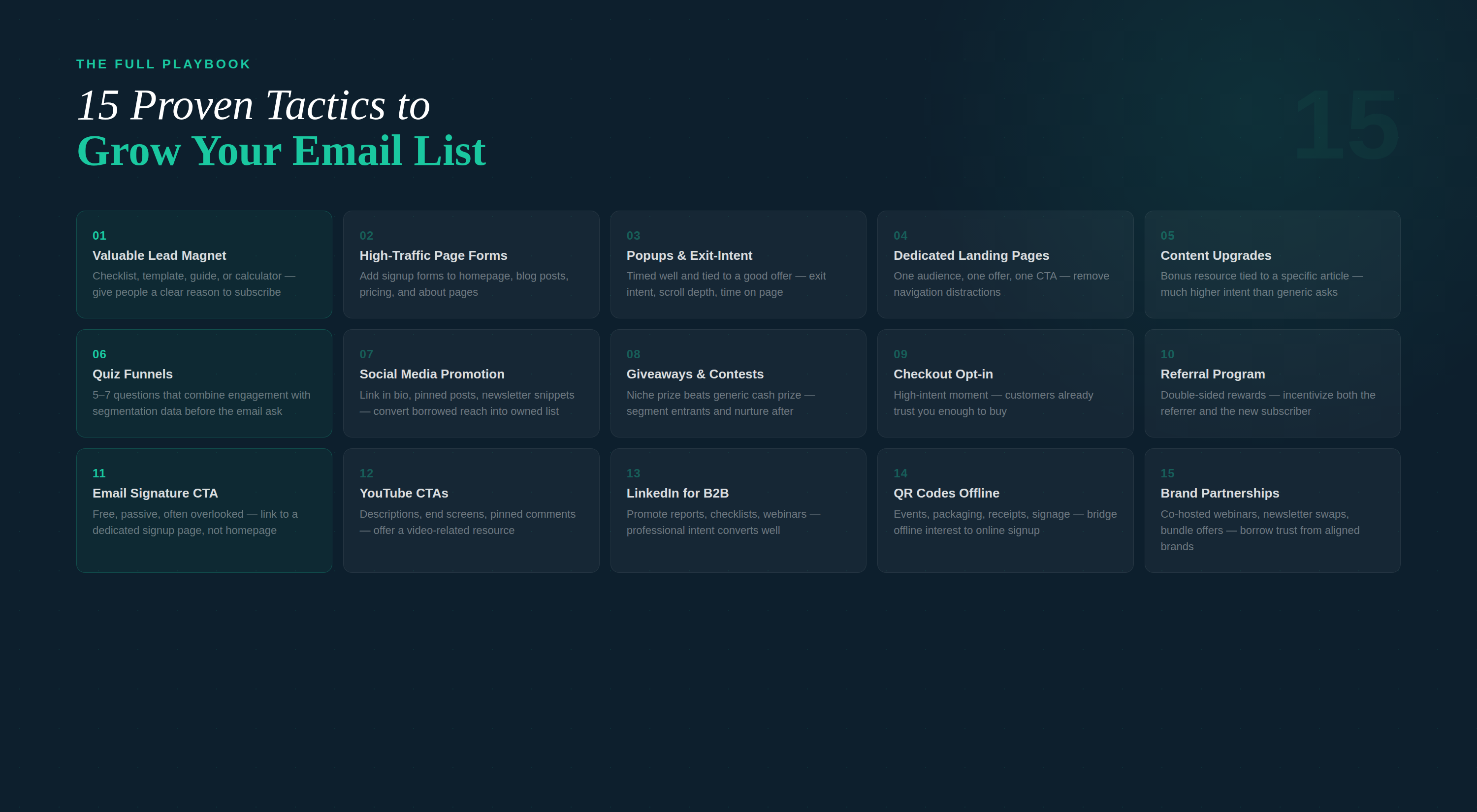
1) Create a Valuable Lead Magnet
A lead magnet is one of the most effective ways to build an email list because it gives people a clear reason to subscribe.
Lead magnet examples
- Checklist
- Template
- Guide
- Swipe file
- Mini-course
- Case study
- Calculator
- Assessment
- Webinar replay
- Audit worksheet
Why it works
People are more likely to share an email address when they get something useful immediately.
Pro tip
Match the lead magnet to a specific problem your audience wants to solve now.
2) Add Signup Forms to High-Traffic Pages
Don’t rely on one generic signup form buried in your footer.
Add forms to pages people actually visit, such as:
- homepage
- blog posts
- resource pages
- about page
- pricing page
- contact page
- footer (still useful)
Why it works
You increase the number of opportunities for visitors to subscribe.
Pro tip
Customize form copy based on the page topic instead of using the same “Join our newsletter” form everywhere.
3) Use Popups and Exit-Intent Forms (Carefully)
Popups can feel intrusive if overused, but they can be very effective when timed well and tied to a good offer.
Good popup triggers
- exit intent (desktop)
- time on page
- scroll depth
- second pageview
- specific page categories
Why it works
You capture visitors who may otherwise leave without taking action.
Pro tip
Test timing and messaging before changing the offer itself.
4) Build Dedicated Landing Pages for Offers
If you’re running a campaign, sending traffic to your homepage usually lowers conversion rates.
A dedicated landing page keeps the message focused:
- one audience,
- one offer,
- one CTA.
Use landing pages for
- lead magnets
- webinars
- ebook downloads
- free trials
- consultations
- giveaways
- event registrations
Pro tip
Remove navigation distractions when possible to keep attention on the signup.
5) Use Content Upgrades on Blog Posts
A content upgrade is a bonus resource tied to a specific article.
Example
- Blog post: How to Improve Email Open Rates
- Content upgrade: 50 Subject Line Examples PDF
Why it works
The offer is highly relevant to what the reader is already interested in.
Pro tip
Content upgrades often convert better than generic newsletter asks because the intent is stronger.
6) Build a Quiz Funnel
Quizzes are a powerful way to grow an email list because they combine interaction with personalization.
Quiz examples
- Which [solution] is right for you?
- What’s your [score/level]?
- Which [strategy/type] matches your goals?
- What should you do next based on your answers?
Why it works
Quizzes create engagement before the email ask and can collect segmentation data.
Pro tip
Keep quizzes short (usually 5–7 questions) and make the result genuinely useful.
7) Promote Your Newsletter on Social Media
Social media is a great awareness channel, but email is the better ownership channel. Use social to drive subscribers to your list.
Tactics
- add signup link in bio
- pin a post promoting your newsletter
- post “what subscribers got this week”
- share snippets and direct people to join
- use stories/reels/short-form video CTAs
Why it works
It converts borrowed attention into an owned audience.
Pro tip
Create a dedicated social signup page so you can track and tailor follow-up for social subscribers.
8) Run Giveaways and Contests Strategically
Giveaways can grow your email list quickly—but quality depends on the prize.
To attract better-fit subscribers
- choose a prize related to your niche
- be clear about what people are signing up for
- segment entrants separately
- nurture them after the giveaway ends
Why it works
Contests increase urgency and attention, especially when promoted across channels.
Pro tip
A niche prize usually beats a generic cash prize if you care about long-term engagement.
9) Add a Signup Option at Checkout
Checkout is a high-intent moment, especially for ecommerce and service businesses.
Examples
- receive product tips and offers
- get restock alerts
- get members-only discounts
- receive updates and promotions
Why it works
Customers already trust your brand enough to buy, so subscribing can feel like a natural next step.
Pro tip
Keep marketing consent clear and separate from transactional communication where required.
10) Launch a Referral Program for Subscribers
Your existing subscribers can help you grow your mailing list if you give them a reason to share.
Referral incentives
- discounts
- store credit
- loyalty points
- bonus resources
- early access
- exclusive content
Why it works
Referrals bring in people who already trust the source (your current subscriber/customer).
Pro tip
Use double-sided rewards when possible (reward both the referrer and the new subscriber).
11) Add a Newsletter CTA to Your Email Signature
This is simple, free, and often overlooked.
Example signature CTA
- Get weekly marketing tips → [link]
- Join our newsletter for new resources → [link]
- Download our free guide → [link]
Why it works
You’re already emailing people—this adds a passive list-building opportunity to everyday communication.
Pro tip
Link to a dedicated signup page, not your homepage.
12) Use YouTube to Build an Email List
If you create video content, your viewers are often ideal subscribers—especially if your emails continue the education.
Where to place email list CTAs on YouTube
- video descriptions
- pinned comments
- end screens
- verbal mentions in videos
- channel banner links
Why it works
Viewers already know your style and expertise, so trust is higher than cold traffic.
Pro tip
Offer a video-related checklist, template, or guide as the signup incentive.
13) Use LinkedIn for B2B Email List Building
LinkedIn is strong for B2B newsletters, reports, webinars, and educational lead magnets.
Tactics
- post insights and link to a signup page
- promote reports/checklists
- invite people to subscribe to your newsletter
- use comments/DMs (carefully, non-spammy) to share relevant resources
Why it works
You attract subscribers based on professional relevance and intent.
Pro tip
B2B subscribers often respond well to educational nurture emails before sales emails.
14) Capture Offline Signups With QR Codes
In-person experiences can be excellent email list growth opportunities.
Use QR codes on
- event signage
- trade show booths
- product packaging
- receipts
- inserts
- print handouts
- retail displays
Why it works
QR codes make it easy to bridge offline interest to online signup.
Pro tip
Send people to a mobile-optimized landing page with a very simple form.
15) Partner With Complementary Brands or Creators
Partnerships can expose your brand to an audience that is already likely to care about your topic.
Partnership ideas
- co-hosted webinars
- co-branded guides
- newsletter swaps
- bundle offers
- joint events
- guest content
Why it works
You borrow trust from a brand or creator your audience already follows.
Pro tip
Choose partners with complementary audiences—not direct competitors.
Email List Building Best Practices (Do’s and Don’ts)
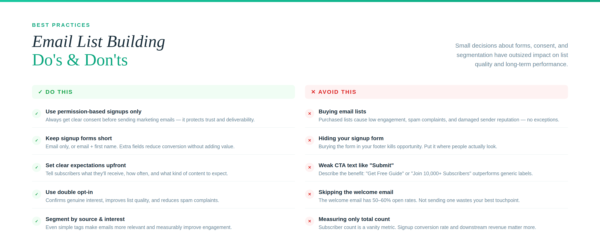
Do: Use permission-based signups only
Always get consent before sending marketing emails.
Don’t: Buy email lists
Purchased lists often lead to low engagement, spam complaints, and poor performance.
Do: Keep signup forms short
Start with email only or email + first name unless you truly need more information.
Do: Set expectations clearly
Tell subscribers:
- what they’ll receive,
- how often you’ll email,
- and what kind of content you send.
Do: Use double opt-in (recommended)
Double opt-in improves list quality and helps confirm genuine interest.
Don’t: Send the same message to everyone
Segmenting by source, topic, and engagement makes your emails more relevant.
Do: Make unsubscribing easy
A clear unsubscribe option protects trust and helps keep your list healthy.
Common Email List Building Mistakes to Avoid
Here are common mistakes that slow growth or hurt performance:
- Hiding your signup form
- Using weak CTA text like “Submit”
- Offering no clear value for subscribing
- Sending campaign traffic to a generic homepage
- Not sending a welcome email
- Failing to segment by source or interest
- Buying or importing non-permission-based lists
- Asking for too much information too early
- Ignoring inactive subscribers
- Focusing only on subscriber count instead of conversion quality
How to Manage and Clean Your Email List
Building a list is only half the job. Ongoing list management keeps your performance strong.
1) Segment subscribers early
Even simple segments help:
- source (blog, social, webinar, checkout)
- topic/interest
- engagement level
- customer vs non-customer
2) Run welcome and nurture sequences
A good welcome sequence improves engagement and helps subscribers understand what value you provide.
3) Re-engage inactive subscribers
Create a re-engagement campaign for people who haven’t opened or clicked in a while.
Re-engagement ideas
- “Still want to hear from us?”
- “Choose what topics you want”
- “Here’s what you’ve missed”
- “We’ll pause your emails unless you confirm”
4) Clean your list regularly
Suppress or remove long-term inactive subscribers after re-engagement attempts.
5) Continue testing
Test and improve:
- form headlines
- CTA buttons
- popup timing
- offers
- landing page copy
- welcome email subject lines
- send cadence
Key Metrics to Track for Email List Building
If you want to rank and convert on this topic, this section matters because many articles stop at “tips” and don’t explain measurement.
List Growth Metrics
- New subscribers
- Unsubscribes
- Net list growth rate
- Signup conversion rate (visitors → subscribers)
Form & Landing Page Metrics
- Form views
- Form submissions
- Conversion rate by page
- Conversion rate by traffic source
Email Engagement Metrics
- Open rate (directional)
- Click-through rate (CTR)
- Click-to-open rate (CTOR)
- Reply rate
- Unsubscribe rate
Quality & Conversion Metrics (Most Important)
- Welcome sequence clicks
- Lead magnet download completion
- Demo/appointment requests
- Purchases from new subscribers
- Conversion rate by signup source
- Engagement by segment
What to focus on first
If you’re new, track these 5 first:
- New subscribers
- Signup conversion rate
- Welcome email click rate
- Unsubscribe rate
- Conversion from subscriber to lead/customer
Make Email List Building Easier With Adaptix
Once you understand how to build an email list strategically, the next step is execution—and that’s where having the right platform helps.
Adaptix makes it easier to implement the tactics in this guide with:
- signup forms,
- landing pages,
- automations,
- segmentation/tags,
- broadcast campaigns,
- and reporting in one place.
So while this article focuses on how to build an email list as a whole, Adaptix can help you put the strategy into action faster and manage your email list growth more efficiently.
Final Takeaway
If you want to rank and win with email list building, remember this:
The goal is not just to collect more email addresses—it’s to build a high-quality, permission-based list of people who want your content and offers.
Start with:
- a clear value exchange,
- easy signup paths,
- a welcome sequence,
- and a few proven growth tactics.
Then test, segment, and optimize over time.
That’s how you build an email list that becomes a real business asset.
FAQs About Email List Building
What is the best way to build an email list?
The best way to build an email list is to offer something valuable, make signup easy, and follow up with relevant emails. A clear value exchange (like a guide, checklist, webinar, or discount) usually performs better than a generic “join our newsletter” ask.
How do I create an email list from scratch?
To create an email list from scratch:
- Choose an email platform
- Create a signup offer
- Add a signup form
- Build a landing page (if needed)
- Drive traffic
- Send a welcome email
- Segment and optimize
What is email list building?
Email list building is the process of growing a permission-based mailing list of subscribers who want to receive emails from your business.
What is an email list builder?
An email list builder is a tool or platform used to create forms, collect subscribers, manage segments, and send emails or automations.
Should I buy an email list?
No. Buying an email list usually leads to low engagement, spam complaints, and poor performance. It’s better to build your list organically with permission-based signup methods.
How often should I clean my email list?
Review list quality regularly and clean inactive subscribers every few months, especially if you send emails frequently.
How many fields should my signup form have?
Keep it short. Email only—or email + first name—is usually best for conversion unless you need extra data for routing or segmentation.
Should I use double opt-in?
Yes, in most cases. Double opt-in improves list quality and confirms that subscribers truly want your emails.
What’s the difference between a mailing list and an email list?
In digital marketing, the terms are usually used interchangeably.
